Here in Washington, the combination of extreme heat, high humidity, and near-constant rainfall creates a perfect storm for fuel storage problems. If you operate an above-ground storage tank on your job site, farm, marina, or facility, understanding fuel contamination is the difference between smooth operations and costly breakdowns.
How Water Gets Into Your Fuel Tank
Contrary to what many operators believe, fuel and water absolutely do mix — and the results are destructive. Water enters storage tanks through several pathways: damaged fill boxes and loose fittings are the most common culprits, but condensation is equally problematic. When Washington temperatures swing between day and night, warm humid air enters the tank through the vent, cools, and deposits water directly into your fuel.
Heavy rainfall — especially during hurricane season — creates additional risks. Rainwater can accumulate around poorly sealed fill caps and slowly seep inside. Even tanks that appear sealed can accumulate significant water through these micro-entry points over weeks and months.
What Microbial Contamination Does to Your Fuel
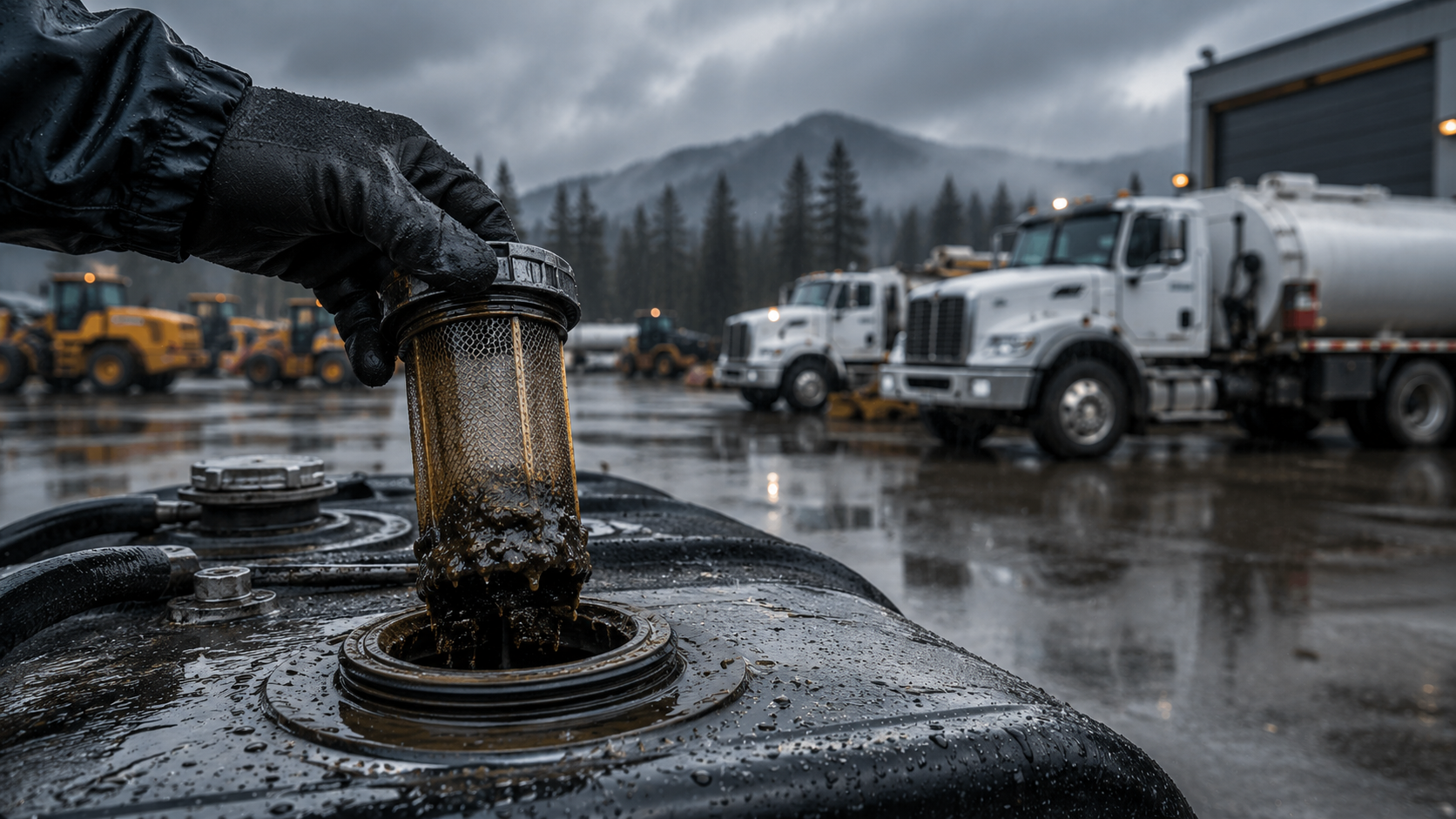
Once water is present in diesel fuel, microorganisms — bacteria and fungi — begin to grow at the fuel-water interface. This is sometimes called “diesel bug,” and it thrives in Washington’s warm conditions year-round. The result is a dark, slimy sludge that settles to the bottom of your tank and gets drawn into fuel lines and filters.
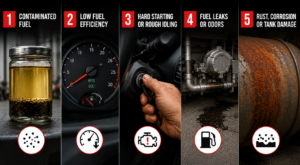
The signs of microbial contamination are unmistakable once you know what to look for: fuel filters clogging far more frequently than normal, a distinctive rotten-egg or sulfur smell when you open the tank, unexplained equipment performance issues, and erratic fuel gauge readings. Left untreated, the contamination degrades fuel quality to the point where it can cause injector damage and complete engine failure.
Preventive Maintenance: What You Should Do
The most effective defense against fuel contamination is a proactive maintenance schedule. At minimum, have your tank inspected and bottom-sampled annually — ideally before hurricane season starts in June. Tank cleaning, biocide treatments (which eliminate microbial growth), and water-removing additives should all be part of your program.
Filter replacement intervals should be based on actual fuel throughput rather than a fixed calendar schedule. A construction site burning 2,000 gallons a week needs filter changes far more often than a generator facility using 100 gallons a month. Matching your maintenance to your usage protects both your equipment and your fuel investment.
How Evergreen Fuel Helps
When you source your diesel from Evergreen Fuel & Lubes, you’re getting fuel that meets ASTM D975 quality standards and is delivered in clean, well-maintained tankers. For customers with on-site storage tanks — including our tank rental customers — we offer scheduled delivery programs that ensure your tank stays properly topped off, reducing the air-to-fuel ratio that accelerates condensation buildup.
If you’re experiencing contamination issues or want to discuss a tank maintenance program for your Washington operation, contact our team today. We’ve seen every kind of fuel storage problem this state can throw at a tank, and we know how to solve them.