Your above-ground fuel storage tank is working every day without complaint — until it isn’t. By the time most problems become obvious, they’ve already been quietly damaging your equipment and degrading your fuel quality for weeks or months. Knowing what to watch for lets you catch problems early, before a tank issue becomes an equipment failure or an environmental compliance problem.
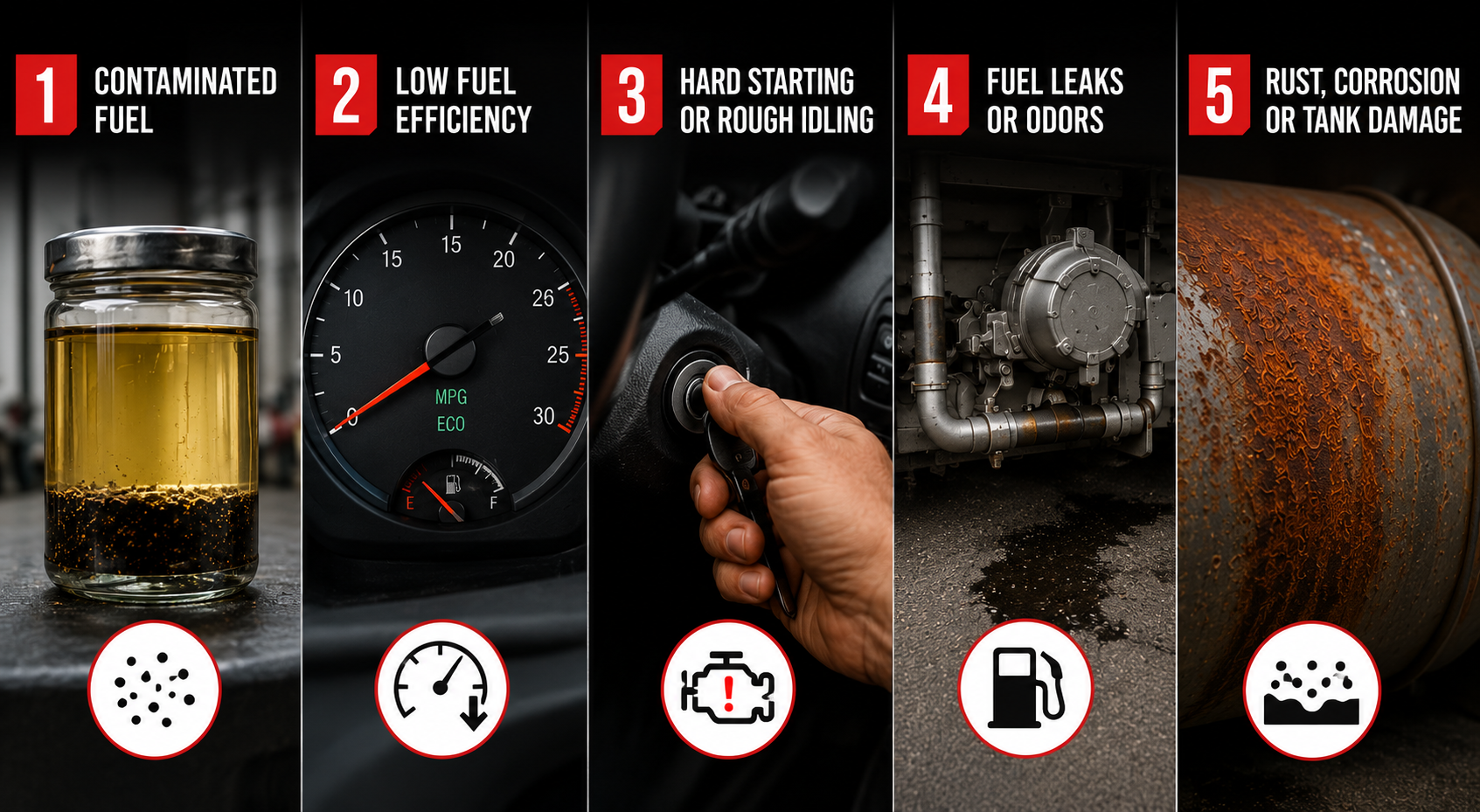
Warning Sign #1: Filters Clogging More Frequently Than Normal
This is the earliest and most reliable indicator of a tank problem. If you’re changing fuel filters on your equipment more often than the manufacturer recommends, the problem almost certainly isn’t the filters — it’s what’s in your fuel. Microbial contamination (the “diesel bug”) produces sludge that collects at the tank bottom and gets drawn into fuel lines. Sediment and rust particles from a deteriorating tank wall have the same effect. Track your filter change intervals. If they’re shortening, investigate your tank.
Warning Sign #2: A Rotten Egg or Sulfur Smell When Opening the Tank
Healthy diesel fuel has a strong, characteristic odor — but not a sulfur or rotten egg smell. That distinctive odor is hydrogen sulfide, a byproduct of sulfate-reducing bacteria that thrive in the water layer at the bottom of contaminated tanks. If you smell it when opening your fill cap or breather, you have an active microbial contamination problem that will only worsen without treatment. Washington’s climate makes this one of the most common tank issues we see.
Warning Sign #3: Dark, Discolored, or Cloudy Fuel
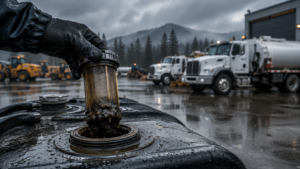
Pull a sample from the bottom of your tank using a bottom sampler or by briefly opening the drain valve (if equipped). Fresh #2 diesel is amber-colored and transparent. Dark brown or black fuel indicates oxidation and degradation. Cloudy or milky fuel indicates water contamination. A dark sediment layer at the bottom indicates sludge accumulation from microbial activity or tank corrosion. Any of these findings calls for immediate action.
Warning Sign #4: Equipment Performance Problems with No Mechanical Cause
If your diesel-powered equipment is experiencing rough idling, hard starting, loss of power, excessive black smoke, or injector issues — and your mechanic can’t find a mechanical cause — suspect your fuel quality before you spend money on parts. Degraded fuel with low BTU content, water contamination, or microbial sludge will cause all of these symptoms. The fix isn’t a new injector; it’s a tank cleaning and fresh fuel.
Warning Sign #5: Visible Rust, Corrosion, or Moisture Around the Tank Exterior
Washington’s humidity and salt air (for coastal operations) attack steel tanks from the outside, but exterior corrosion is often a symptom of interior problems as well. Internal condensation accelerates corrosion from the inside out. If you see rust weeping from seams, pitting around fittings, or moisture staining on the tank exterior, have the tank inspected internally before the corrosion progresses to a leak — which creates both an environmental liability and a safety hazard.
What to Do If You See These Signs
Don’t ignore warning signs hoping they’ll resolve themselves — fuel contamination problems are progressive, not self-correcting. A tank that needs service today will need more expensive service — or replacement — if left alone.
Evergreen Fuel & Lubes works with tank service providers throughout Western Washington and can help coordinate maintenance for customers on our delivery routes. For businesses considering an on-site tank, our tank rental program includes regular inspection as part of the agreement. Contact us to discuss your tank situation.