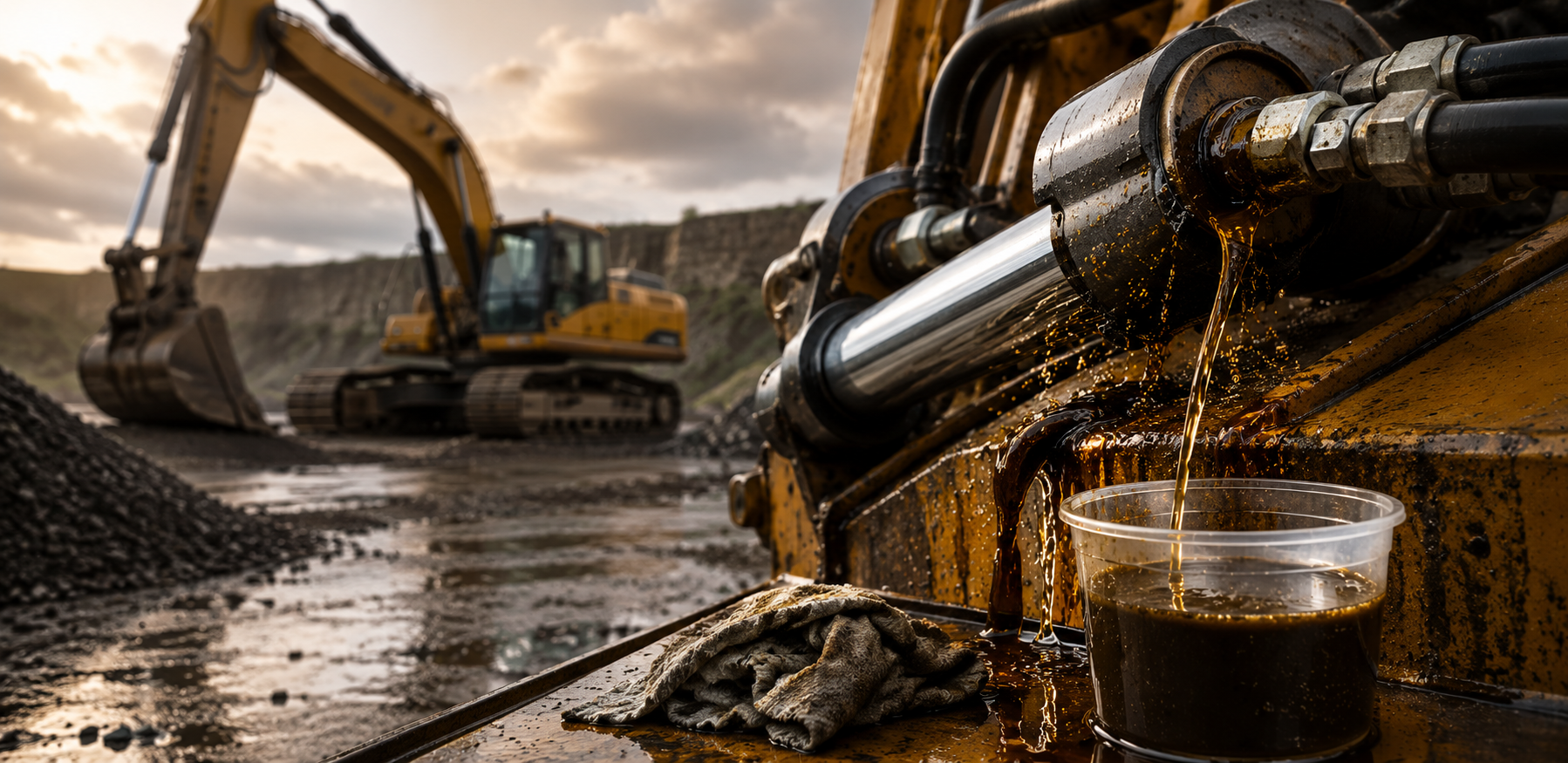
When it comes time to select hydraulic fluid for your heavy equipment, the temptation to go with the cheapest option is understandable — especially when you’re managing tight margins on a construction project or farm operation. But purchasing low-quality hydraulic oil based on price alone is one of the most expensive decisions a fleet manager can make. Here’s why the math doesn’t work in favor of the bargain.
Understanding Viscosity Index: The Quality Gauge You’re Probably Ignoring
The single most important measure of hydraulic oil quality is the Viscosity Index (VI) — a number that indicates how stable the oil’s viscosity (thickness) remains across temperature changes. Average hydraulic oils score 70–80 VI. Better oils reach 95–105 VI. Premium-grade products exceed 140 VI.
Why does this matter in Washington? Because your equipment experiences wide temperature swings — a cold 55°F morning start followed by a 95°F afternoon working in direct sun. A low-VI oil thins out dramatically in heat and thickens in cold, meaning your hydraulic system never operates at optimal pressure. A high-VI oil maintains consistent viscosity throughout, delivering predictable performance and better protection.
The Hidden Cost: Filterability and System Contamination
Cheap hydraulic fluids typically use lower-quality additive packages that break down faster under pressure and heat cycling. As additives degrade, they form particles that accumulate in the fluid. This matters enormously for filterability — a measure of how cleanly oil passes through hydraulic filters without clogging them.
When filterability is poor, filters clog more frequently, system pressure drops, and components experience increased wear. The cost of replacing hydraulic pumps, cylinders, and control valves on a single piece of heavy equipment can easily run $5,000–$25,000. Compare that to the price difference between cheap and premium hydraulic fluid across a year of operation, and premium oil pays for itself several times over.
Water Separation and Foam: Washington-Specific Problems
Washington’s humidity creates another challenge: water contamination in hydraulic systems. Premium hydraulic fluids have superior water-separation characteristics, allowing water to settle out quickly where it can be drained. Low-quality oils tend to emulsify water — mixing it throughout the fluid — which accelerates oxidation, promotes microbial growth, and reduces lubricating film strength.
Foam generation is the other Washington-specific issue. Hydraulic systems working hard in heat generate air bubbles in the fluid. Premium fluids with proper anti-foam additives release these bubbles quickly. Foamy hydraulic fluid compresses under pressure, causing “spongy” control response, erratic cylinder movement, and cavitation damage to pumps.
The Biodegradable Option for Marine and Environmental Applications
For equipment operating near Washington’s waterways, wetlands, or environmentally sensitive areas — common in coastal construction and marine applications — biodegradable hydraulic fluid is worth serious consideration. Premium biodegradable options can degrade 60% or more within 28 days, dramatically reducing environmental liability and cleanup costs from minor spills compared to conventional mineral oil.
Talk to an Expert Before You Buy
Evergreen Fuel & Lubes supplies a full range of hydraulic fluids, gear oils, and specialty lubricants for Washington’s heavy equipment operations. Our team can help you evaluate your specific hydraulic system requirements, operating conditions, and usage patterns to identify the right product — not just the cheapest one. Learn more about our oils and lubricants service or contact us to discuss your fleet’s needs.