If you operate a commercial fleet in Washington, you’re probably already using cardlock fueling — the network of commercial fuel stations where drivers swipe a fleet card and fuel up. It’s convenient, widely available, and familiar. But for many Washington fleet operators, it’s also quietly costing them more than they realize. Here’s an honest comparison between cardlock and on-site fuel delivery so you can make the right call for your operation.
How Cardlock Fueling Works (And Where It Breaks Down)
Cardlock networks like Comdata, EFS, and WEX give your drivers access to thousands of commercial fuel locations. You get consolidated billing and transaction reporting by vehicle. For over-the-road long-haul operations where routes are unpredictable, cardlock is often the right answer. But for fleets that return to a home base — and that describes the majority of Western Washington’s service, construction, delivery, and municipal fleets — cardlock has significant hidden costs.
The most obvious cost is time. A driver leaving the yard, fueling at a commercial station, and returning adds 20–45 minutes to a workday. For a 20-truck fleet, that’s 7–15 hours of paid labor time spent fueling instead of generating revenue — every single day. At $25/hour including benefits, that’s $175–$375 in daily labor waste, or $45,000–$97,000 per year for a fleet that size.
The Hidden Costs of Driver-Fueled Vehicles
Fuel shrinkage — the gap between fuel purchased and fuel used in fleet vehicles — is a persistent problem with driver-managed fueling. Industry estimates suggest fuel shrinkage runs 2–5% of total fuel spend for fleets relying on cardlock. On a $1 million annual fuel budget, that’s $20,000–$50,000 in unaccounted fuel. On-site delivery eliminates this entirely: fuel goes directly from our tank truck into your storage tank, and from your tank into your vehicles under your supervision.
There’s also the price differential. Retail commercial fuel prices include the station’s margin on top of the wholesale cost. Bulk fuel delivery contracts are priced at or near the wholesale rack price with a delivery fee, eliminating the retail markup. For high-volume operations, this difference alone frequently justifies the switch.
When On-Site Delivery Makes Clear Financial Sense
On-site fuel delivery becomes clearly advantageous when:
- Your fleet returns to a central yard or facility daily
- You fuel 5+ vehicles regularly (the volume justifies delivery minimums)
- Your vehicles consume 1,000+ gallons per week
- Driver time is a meaningful cost (virtually always true)
- You have or can install a storage tank on your property
- You want consistent fuel quality and documentation without relying on station-by-station variation
This profile fits the majority of construction fleets, municipal operations, agricultural businesses, waste management companies, and commercial delivery operations in Western Washington.
The On-Site Tank Solution
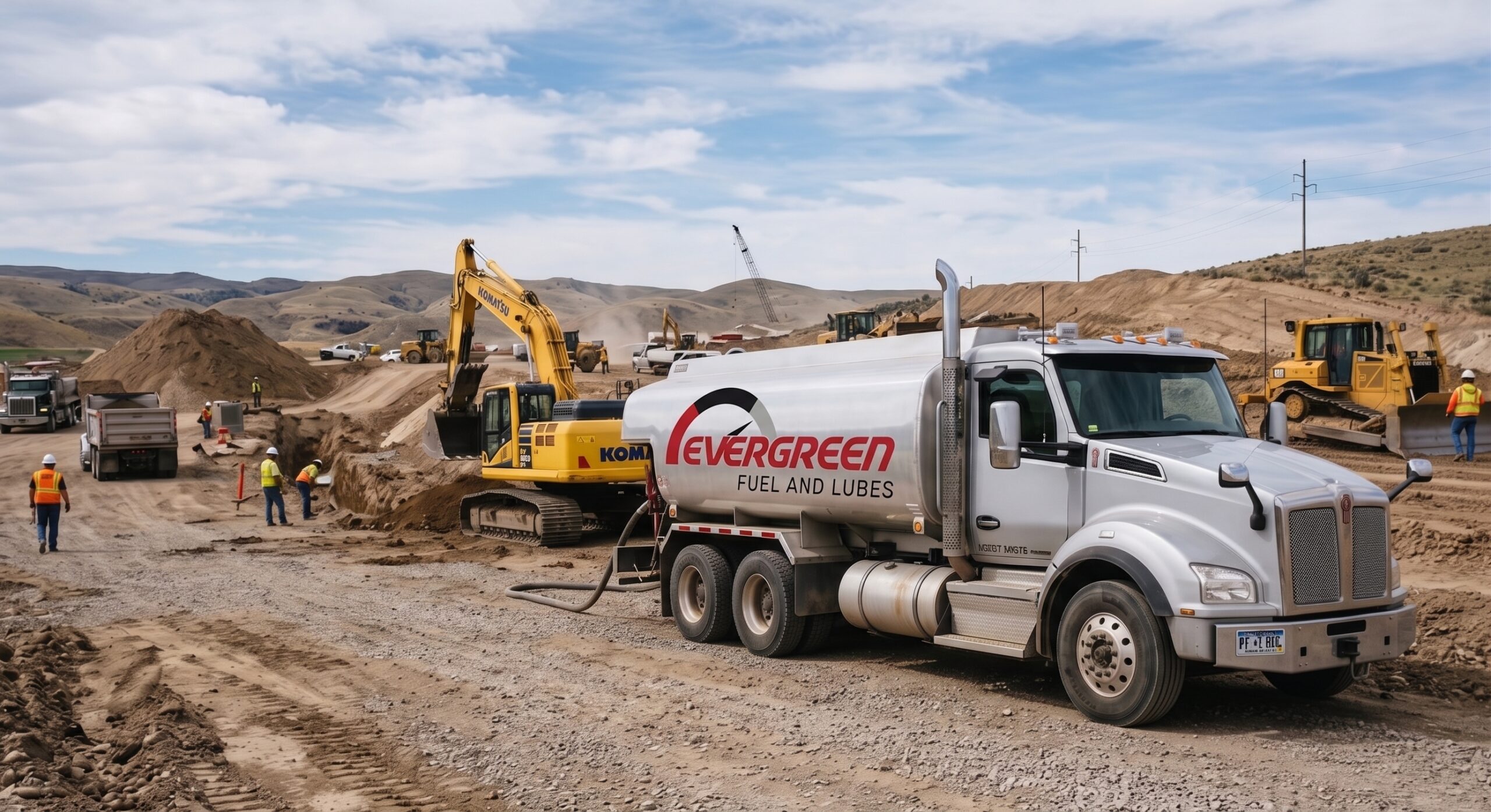
The most common barrier to on-site fueling is storage infrastructure. Not every operation has an above-ground tank. Evergreen Fuel solves this through our tank rental program — we deliver, install, and maintain the tank; you just supply the real estate and we keep it filled. The rental cost is typically recovered within months through the savings in driver time and retail markup elimination.
Making the Transition
Switching from cardlock to on-site delivery doesn’t have to be all-or-nothing. Many fleets maintain cardlock as a backup for vehicles that travel beyond their service area while transitioning their home-base fueling to on-site delivery. This hybrid approach captures most of the savings while maintaining flexibility.
Evergreen Fuel & Lubes has helped dozens of Western Washington fleets make this transition. We’ll analyze your current fuel spend, map your fleet’s routing patterns, and help you model the actual savings for your specific operation before you commit to anything. Contact us to start the conversation.